
Introduction
For much of the twentieth century, many scientists believed the adult brain was largely fixed: once we grew up, the wiring was set and the only direction was decline. Research over the past few decades has changed that picture. Brains continue to adapt in response to what we do, learn and practise — at every age.
That finding has made mental activity and lifelong learning serious subjects of study. Researchers want to know what kinds of activity matter, how much difference they make, and where the evidence is still uncertain. The answers are encouraging, but they are also more nuanced than many headlines suggest.
Below, we summarise fifteen genuine, peer-reviewed studies and authoritative reports. For each one, we separate what the researchers found from what it may mean for everyday life, and we link to the original source so you can read it yourself.
Neuroplasticity: the brain's ability to adapt
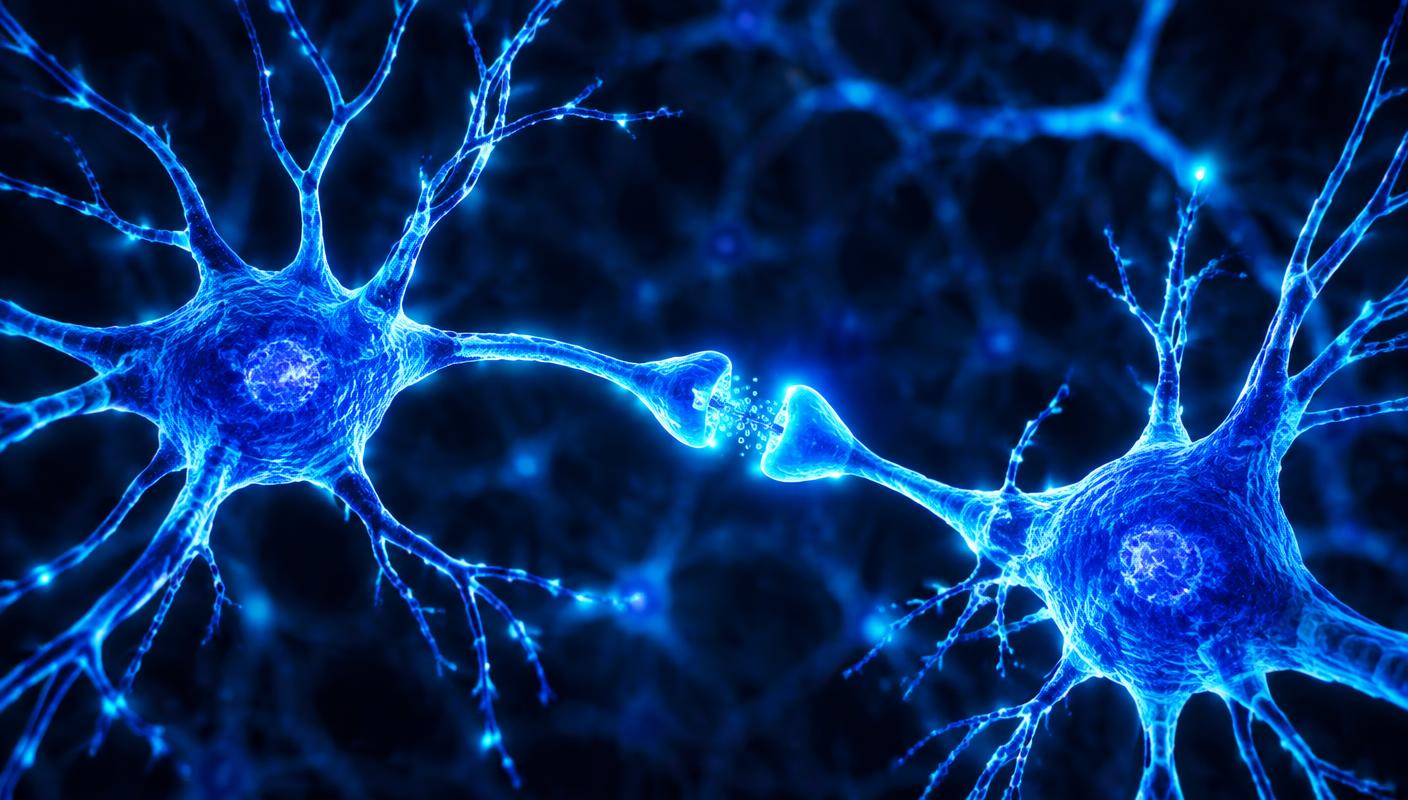
Neuroplasticity is the brain's capacity to change its structure and function with experience. These studies show it is measurable in adults.
Study 1
Neuroplasticity: changes in grey matter induced by training
Draganski B, Gaser C, Busch V, Schuierer G, Bogdahn U, May A (2004). Nature, 427, 311–312.
- What was investigated
- Adults with no juggling experience learned a three-ball juggling routine over three months; brain scans were taken before, after training and after a further three months without practice.
- Key findings
- Learners showed a temporary increase in grey matter in brain areas that process visual motion. The increase shrank once they stopped practising.
- Conclusion (our interpretation)
- The adult brain can change physically in response to learning a new skill — and continued practice appears to matter.
Full text may require institutional access.
Study 2
Navigation-related structural change in the hippocampi of taxi drivers
Maguire EA, Gadian DG, Johnsrude IS, et al. (2000). Proceedings of the National Academy of Sciences, 97(8), 4398–4403.
- What was investigated
- Brain scans of licensed London taxi drivers, who memorise thousands of streets, were compared with those of people who did not drive taxis.
- Key findings
- Drivers had a larger rear part of the hippocampus, a region important for spatial memory, and its size related to years of driving experience.
- Conclusion (our interpretation)
- Intensive, long-term use of a mental skill is associated with structural brain differences. This was an observational study, so it shows association rather than proof of cause.
Full text may require institutional access.
Cognitive stimulation and mental activity
Do mentally stimulating everyday activities relate to how well we think as we age?
Study 3
Participation in cognitively stimulating activities and risk of incident Alzheimer disease
Wilson RS, Mendes de Leon CF, Barnes LL, et al. (2002). JAMA, 287(6), 742–748.
- What was investigated
- More than 800 older Catholic clergy members reported how often they did activities like reading, puzzles and visiting museums, and were followed for about four and a half years.
- Key findings
- People who did such activities more often had a lower risk of developing Alzheimer's disease during follow-up and showed slower decline in some cognitive abilities.
- Conclusion (our interpretation)
- Mentally active lifestyles are linked to better outcomes, though people who are already healthier may also simply be more active.
Study 4
The impact of sustained engagement on cognitive function in older adults: the Synapse Project
Park DC, Lodi-Smith J, Drew L, et al. (2014). Psychological Science, 25(1), 103–112.
- What was investigated
- Older adults spent about 15 hours a week for three months learning demanding new skills (digital photography, quilting or both) or doing easier, familiar activities.
- Key findings
- Those who learned demanding new skills, particularly photography, improved more on episodic memory tests than those doing familiar or social activities.
- Conclusion (our interpretation)
- Sustained, challenging learning — not just staying busy — may be what helps certain memory abilities.
Brain training and cognitive performance
Structured training improves the trained skill. Whether it improves other abilities is where the scientific debate lies.
Study 5
Effects of cognitive training interventions with older adults: a randomized controlled trial (ACTIVE)
Ball K, Berch DB, Helmers KF, et al. (2002). JAMA, 288(18), 2271–2281.
- What was investigated
- Over 2,800 healthy adults aged 65 and older were randomly assigned to ten sessions of memory, reasoning or speed-of-processing training, or to no training.
- Key findings
- Each type of training improved the specific ability that was trained, and gains lasted two years. Little transfer to everyday functioning was seen at that point.
- Conclusion (our interpretation)
- Practice reliably improves what you practise. Broader real-world effects need longer follow-up and should not be assumed.
Study 6
Ten-year effects of the ACTIVE cognitive training trial on cognition and everyday functioning in older adults
Rebok GW, Ball K, Guey LT, et al. (2014). Journal of the American Geriatrics Society, 62(1), 16–24.
- What was investigated
- The ACTIVE participants were followed up ten years after their original training sessions.
- Key findings
- Reasoning and speed training still showed benefits on those skills; memory training benefits had faded. All trained groups reported somewhat less difficulty with daily activities than controls.
- Conclusion (our interpretation)
- Some training benefits can be long-lasting, but effects differ by type of training and remain modest.
Full text may require institutional access.
Study 7
Putting brain training to the test
Owen AM, Hampshire A, Grahn JA, et al. (2010). Nature, 465, 775–778.
- What was investigated
- More than 11,000 adults completed online brain-training tasks at least three times a week for six weeks.
- Key findings
- Participants improved on the tasks they practised, but showed no meaningful improvement on untrained tests of reasoning, memory or planning.
- Conclusion (our interpretation)
- Getting better at a game does not automatically mean getting better at thinking in general.
Full text may require institutional access.
Working memory, attention and reasoning
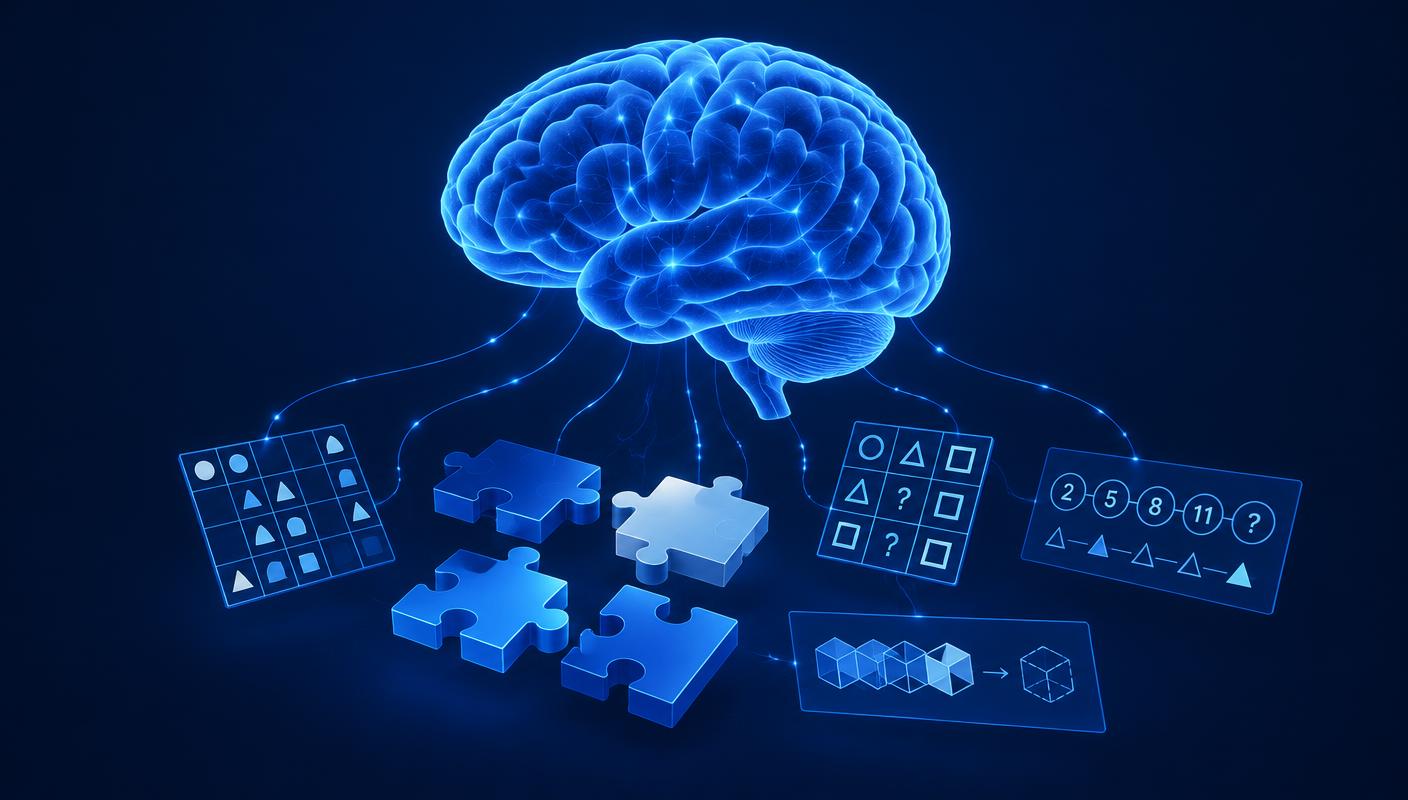
Working memory — holding and using information for a few seconds — supports attention, reasoning and problem-solving.
Study 8
Improving fluid intelligence with training on working memory
Jaeggi SM, Buschkuehl M, Jonides J, Perrig WJ (2008). Proceedings of the National Academy of Sciences, 105(19), 6829–6833.
- What was investigated
- Young adults trained on a demanding working-memory task (the dual n-back) for different numbers of days.
- Key findings
- Trained groups improved on a reasoning test, and more training was linked to larger gains.
- Conclusion (our interpretation)
- An influential and promising result — but later studies (see next card) have not consistently reproduced it.
Full text may require institutional access.
Study 9
Is working memory training effective? A meta-analytic review
Melby-Lervåg M, Hulme C (2013). Developmental Psychology, 49(2), 270–291.
- What was investigated
- The authors pooled results from 23 studies of working-memory training in children and adults.
- Key findings
- Training produced short-term gains on similar working-memory tasks, but no convincing evidence of lasting improvement in broader skills such as reasoning, reading or arithmetic.
- Conclusion (our interpretation)
- Working-memory practice sharpens closely related skills; claims of wide-ranging benefits are not well supported.
Full text may require institutional access.
Cognitive reserve and lifelong learning
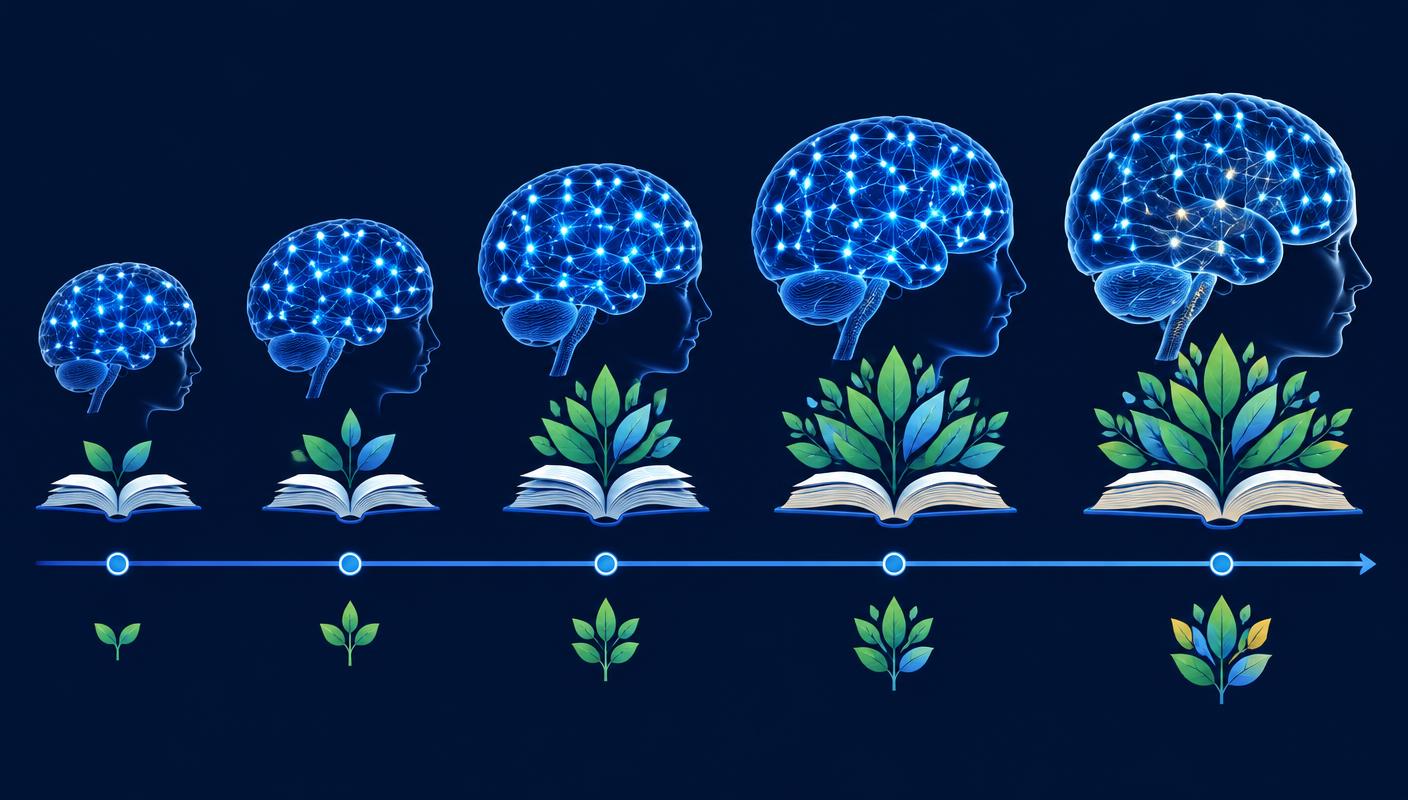
Why do some people stay sharp despite age-related changes in the brain? Cognitive reserve is one leading explanation.
Study 10
Cognitive reserve in ageing and Alzheimer's disease
Stern Y (2012). The Lancet Neurology, 11(11), 1006–1012.
- What was investigated
- A review of research on why people with similar brain changes can differ greatly in their thinking abilities.
- Key findings
- Education, demanding occupations and leisure activities are associated with greater 'cognitive reserve' — an ability to cope with brain changes for longer before symptoms appear.
- Conclusion (our interpretation)
- A lifetime of mental engagement may help the brain work around damage, though it does not stop underlying disease.
Full text may require institutional access.
Study 11
Risk reduction of cognitive decline and dementia: WHO guidelines
World Health Organization (2019). WHO Guidelines (ISBN 978-92-4-155054-3).
- What was investigated
- WHO expert groups graded the evidence for lifestyle interventions to reduce the risk of cognitive decline and dementia.
- Key findings
- Physical activity, stopping smoking and managing conditions such as high blood pressure were recommended. Cognitive training could be offered to older adults, but the evidence was rated very low to low quality.
- Conclusion (our interpretation)
- Mental activity is one sensible part of brain health, alongside physical and cardiovascular health — not a standalone solution.
Digital cognitive training: benefits and limitations
Computer and app-based training is popular. Systematic reviews help us see what it can and cannot do.
Study 12
Do "brain-training" programs work?
Simons DJ, Boot WR, Charness N, et al. (2016). Psychological Science in the Public Interest, 17(3), 103–186.
- What was investigated
- A detailed review of the studies cited by brain-training companies in support of their products.
- Key findings
- There was extensive evidence that training improves trained tasks, less evidence for closely related tasks, and little evidence that it improves everyday cognitive performance.
- Conclusion (our interpretation)
- Brain games can be valuable for practice and enjoyment, but expectations should be realistic and claims carefully checked.
Study 13
Computerized cognitive training in cognitively healthy older adults: a systematic review and meta-analysis of effect modifiers
Lampit A, Hallock H, Valenzuela M (2014). PLoS Medicine, 11(11), e1001756.
- What was investigated
- Results from 51 randomised trials of computer-based cognitive training in healthy older adults were combined.
- Key findings
- Training produced small but statistically significant improvements in memory, processing speed and visuospatial skills. Supervised, group-based sessions worked better than home-based training, and sessions more than three times a week were less effective.
- Conclusion (our interpretation)
- Digital training can help some skills modestly; how it is done matters.
Cognitive decline and dementia risk
What does the strongest evidence say about lowering the risk of cognitive decline and dementia?
Study 14
A 2 year multidomain intervention of diet, exercise, cognitive training, and vascular risk monitoring versus control to prevent cognitive decline in at-risk elderly people (FINGER)
Ngandu T, Lehtisalo J, Solomon A, et al. (2015). The Lancet, 385(9984), 2255–2263.
- What was investigated
- More than 1,200 Finnish adults aged 60–77 at increased risk were randomly assigned to a combined programme of diet, exercise, cognitive training and vascular health monitoring, or to general health advice.
- Key findings
- After two years, the combined-programme group scored better on an overall measure of cognitive performance than the control group.
- Conclusion (our interpretation)
- Combining several healthy habits may help protect thinking skills. The effect of cognitive training on its own cannot be separated in this trial.
Study 15
Dementia prevention, intervention, and care: 2020 report of the Lancet Commission
Livingston G, Huntley J, Sommerlad A, et al. (2020). The Lancet, 396(10248), 413–446.
- What was investigated
- An international commission reviewed the evidence on modifiable risk factors for dementia across the life course.
- Key findings
- Twelve modifiable factors — including less education in early life, hearing loss, hypertension, physical inactivity and social isolation — together account for around 40% of dementias worldwide.
- Conclusion (our interpretation)
- Dementia risk is shaped by many factors across life. Education and staying mentally and socially engaged are part of that picture, but no single activity guarantees prevention.
What Does This Research Mean for Us?
- The brain keeps its ability to adapt throughout life. Learning new skills produces measurable changes, even in adulthood.
- Mental activities can improve the specific cognitive skills that are practised, and some gains can last for years.
- Continued learning and cognitive engagement — especially challenging, new learning — are valuable and linked to healthier ageing.
- Brain-training benefits have limits. Improvement on a game does not automatically transfer to everyday thinking, so expectations should be realistic.
- No commercial brain-training platform, including Mind-idia, should claim proven dementia prevention without appropriate clinical evidence. Physical activity, cardiovascular health, hearing, sleep and social connection matter too.
Challenge your mind. Enjoy the journey. Keep learning throughout life.
This article is for general information and is not medical advice. Mind-idia games are designed for enjoyment and practice; they are not a medical treatment and do not claim to prevent dementia.